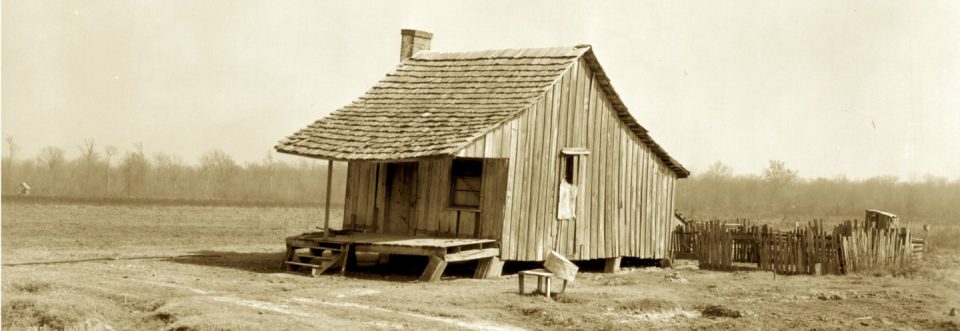
Rest in Peace Mrs. Annye Anderson

Tags

, , ,

I just learned, courtesy of Preston Lauterbach*  (https://thechitlincircuit.substack.com/p/rest-mrs-annye-c-anderson) that Mrs. Annye Anderson passed away July 3. Annye Anderson was the sister of Robert Johnson (technically his step-sister, but ignoring biology she was very much his sister.)

Two years ago, I was fortunate to have the opportunity to speak with Mrs. Anderson. Some of the nuggets from that conversation will feature in the chapter on “Come on In My Kitchen.”  She was generous with her time, charming to speak with, sharp as a tack, and for someone who at the time was 97 years old, possessed of an amazingly clear memory. In some ways speaking to her was like speaking with a ghost; She was born April 20, 1926, in Memphis, and recalled growing up in Jim Crow era Tennessee, attending segregated schools in the 1930s. But while she grew up poor and with all the challenges that came with being a black woman in the pre-civil rights south, Mrs. Anderson went on to earn a Masters degree from Boston University, work for a judge (Arthur Garrity who famously issuing the 1974 order mandating that Boston schools be desegregated), and teach in the Boston school system. She talked about the importance of phonics and a good thesaurus, her love of gardening, especially her collard greens and kale spinach. And she shared her views on music and musicians (she liked Johnny Cash but “didn’t care too much for Bob Dylan.”) And of course she spoke about Robert Johnson, his musical influences, and the music he played on the porch of their house in Memphis.

After 99 years, Annye Anderson has gone to join her Brother Robert. I am honored to have been able to meet her.

Her full obituary here: https://www.legacy.com/us/obituaries/franklincountynow/name/annye-anderson-obituary?id=58848004

Rest in peace Mrs. Anderson.

* I highly recommend Preston’s books, especially “The Chitlin’ Circuit: And the Road to Rock ‘n’ Roll”, “Before Elvis: The African American Musicians Who Made the King”, and “Brother Robert” (co-authored with Annye Anderson), all of which have been valuable sources for the book I am writing on the origins of the music recorded by the Allman Brothers Band. Preston was also kind enough to connect me to Mrs. Anderson.

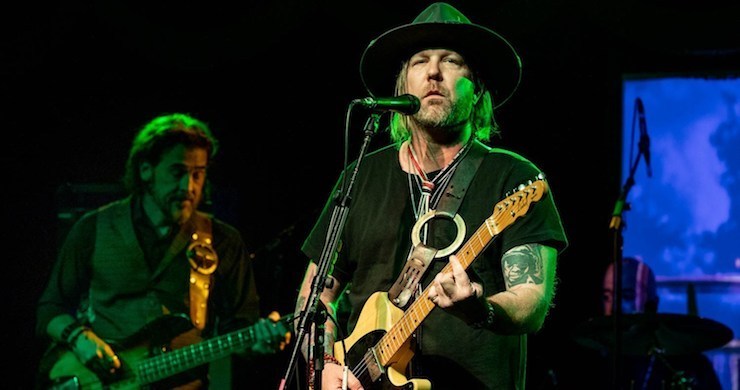
Interview: Chuck Leavell Discusses New Album, Live Dates, Upcoming Tour With Mike Mills

Tags

, ,

Screen-Shot-2019-08-14-at-2.18.14-PM

I just published an interview with former keyboard player for the Allman Brothers Bans, Chuck Leavell: https://liveforlivemusic.com/features/chuck-leavell-interview-2019/


Devon Allman, Chuck Leavell Discuss Songs On Allman Betts Band’s New Album, Honoring The Allman Brothers, More…

Tags

,

I just interviewed Chuck Leavell and Devon Allman about the making of the new Allman Betts album and tour.  You can read the full interview on Live For Live Music.

09-AllmanBetts-3531


Scott Sharrard & Chank Middleton Discuss The Gregg Allman Band, Upcoming City Winery Shows

Tags

, , , , , , , , , , , , , , , , , , , , , , , , , , , , , , , , , ,

While not directly related to my book, I hope you enjoy this interview that I just did with Scott Sharrard and Chank Middleton for LiveforLiveMusic.

In the meantime I am making progress on the research for the book, and have completed over 80 interviews, including current and former members of the Allman Brothers Band, Willie Cobbs (who recorded “You Don’t Love Me”), Donovan, members of the Rolling Stones, the Spencer Davis Group, Muddy Water’s band, the Nitty Gritty Dirt Band, sidemen, producers, sound engineers, friends, and family members, and many more. There is still a lot of work to do, but I’m digging up some great stuff!

I Live The Life I Love – Gregg Covers Muddy

Tags

, , , , , , , , , , , , , , , , , ,


The first song the Allman Brothers Band ever played, and the last (at the Beacon Theater, October 28, 2014) was Muddy Waters “Trouble No More” so it is fitting that the first cover song to be released from Gregg Allman’s final album (“Southern Blood”) is also a Muddy Waters tune:  “I Live The Life I Love (I Love The Life I Live).”


On a freezing cold December 1, 1956, on the Near South Side of Chicago, McKinley Morganfield (better known as Muddy Waters) entered the modest two story building at 2120 South Michigan Avenue that was the new home of Chess Records. With Muddy was producer, songwriter, and bassist Willie Dixon, who had already composed 10 songs for Muddy, including “Hoochie Coochie Man” (covered by the Allman Brothers Band on “Idlewild South” and “Live at Ludlow Garage – 1970.”) Feeling that he had not been compensated fairly by the Chess brothers, Willie had left Chess Records earlier in 1956 for Cobra Records, but still returned for occasional sessions. This would be his last session for Chess until he returned in 1960.

Joining Muddy and Willie (on bass) were groundbreaking blues harmonica player Little Walter, guitar player Hubert Sumlin (sideman in Howlin’ Wolf’s band, number 43 on Rolling Stone’s “100 Greatest Guitarists of All Time,” and featured in the recently released film “Sidemen: Long Road to Glory“), guitarist Pat Hare (who also played with Howlin’ Wolf, Bobby Bland, Junior Parker and others), Muddy’s longtime piano player (and solo artist as well) Otis Spann, and jazz/blues drummer Francis Clay (who played regularly for Muddy and would go on to play behind John Lee Hooker, Jimi Hendrix, and more.)

Willie usually composed and wrote down the lyrics to his songs in advance, and worked out the music and arrangements live in the studio with the band. The band soon settled into a slow medium tempo, and laid down the (mostly) 8 bar blues “I Live The Life I Love (I Love The Life I Live)” in one take, before moving on to record “Rock Me,” “Look What You’ve Done,” and “Got My Mojo Working.”

Muddy and the band would not record again until May or June of 1957, when they recorded “Evil” which would become the B-side of “I Live The Life I Love.” The single was released as Chess 1680 in December of that year, in both the 10″ 78rpm format and on the newer 7″ 45rpm style disk.  Today you can find it on youtube.

Muddy recorded “Live the Life I Love” again in 1969 on the “Fathers and Sons” album, and it has been covered by many artists, including Mose Allison, John Hammond, Georgie Fame, Willie Nelson, Buddy Guy, Hubert Sumlin with Keith Richards, and the Steve Miller Band. The Allman Brothers Band, however, has never performed “Live the Life I Love.”

On March 7, 2016, the Gregg Allman Band arrived at Fame Studios in Muscle Shoals, Alabama. While his previous studio album (“Low Country Blues”) was recorded with session musicians, this time Gregg decided to use his road band. The band, which backed Gregg on 2015’s “Gregg Allman Live: Back to Macon, GA” (well worth a listen) was led by longtime lead guitarist and musical director Scott Sharrard, with Peter Levin on keys, Allman Brothers Band percussionist Marc Quinones, Jay Collins and Art Edmaiston on sax, trumpeter Marc Franklin, drummer Steve Potts, and Ron Johnson on bass. The album was produced by Don Was and the band was augmented with guests from Muscle Shoals including Muscle Shoals Rhythm Section legends Spooner Oldham on keys and David Hood on bass, and Fame Studios founder Rick Hall on keyboards.

Over the next nine days, Gregg and the band laid down the tracks for “Southern Blood,” which would become his final studio album, including his cover of Muddy Waters and Willie Dixon’s “I Love the Life I Live” (recorded by the Gregg Allman Band without any guests.)

Gregg and the band played “I love the Life I Live” eleven times live, debuting the song a few weeks after leaving Muscle Shoals, on April 6, 2016, at The Clay Center for the Arts and Sciences of West Virginia, Charleston, West Virginia. That performance of “I love the Life I Live” is included as a bonus track on some versions the new album. Gregg’s final performance of “I love the Life I Live” was in an abbreviated (6 song) acoustic set with just Gregg and guitarist Scott Sharrard at the 2016 Laid Back Festival, September 25, 2016 at Red Rocks in Colorado.  He would perform live only four more times.

“Southern Blood” is set to be released on September 8.

Billy Boy Arnold – Part 3: On John Lee Curtis “Sonny Boy” Williamson, the Importance of Originality, and Making Good Use of Studio Time

Tags

, , , , , , , , , , , , ,

I recently interviewed Billy Boy Arnold following a show at New York City’s City Winery. This is the third and final part of that interview (see part 1 and part 2.) As a solo artist Billy Boy recorded “I Wish You Would” and “I Ain’t Got You” which were famously covered by the Yardbirds. (Bo Diddley’s “She’s Fine, She’s Mine” with Billy Boy blowing his harp was the first recording of the song that became “You Don’t Love Me,” recorded as an extended jam by the Allman Brothers and forming the entire second side of “At Fillmore East.” That story will be in the book The Unbroken Circle.)

Early blues musicians frequently recycled music and “floating verses.” That began to change in the 1920’s when record companies began recording the blues and valued originality. Billy Boy Arnold learned from some of the greatest blues artists ever, and in a recent conversation he talked about his influences and originality in the blues.

Continue reading

Five Minutes Turns Into Thirty With Butch Trucks

Tags

, , , , , , , , , , ,

Friday night I caught up with Butch Trucks after his show with his Freight Train Band, at the Tarrytown Music Hall an hour north of the famed Beacon Theater. Butch and the band started the show, as he often does, with the Allman Brothers instrumental “Hot ‘Lanta,” and continued the two hour set with fan favorites including “Trouble No More,” “Jessica,” “Dreams,” and many others. The audience immediately recognized the rumbling bass line when the band returned for an encore that began with a thunderous “Whipping Post” before segueing into “Mountain Jam” and back to conclude the evening. Butch didn’t just play Allman Brothers material though, playing original material from keyboard player Bruce Katz, and treating the audience to a cover of “Highway 61 Revisited.” Butch isn’t known as a singer, but as he said “it’s a Bob Dylan song, so I don’t give a shit!”   After playing “Statesboro Blues,” Butch took a minute out to quiz the audience on the authorship of the song (Blind Willie McTell) and making sure that the audience knew that Jesse Ed Davis (playing for Taj Mahal) was the first to play slide guitar on the song that became the Allman Brothers signature song. Continue reading

Billy Boy Arnold – Part 2: How Ellas McDaniel Became Bo Diddley

Tags

, , , ,

I recently interviewed Billy Boy Arnold following a show at New York City’s City Winery. This is the second part of that interview. As a solo artist Billy Boy recorded “I Wish You Would” and “I Ain’t Got You” which were famously covered by the Yardbirds.  (Bo Diddley’s “She’s Fine, She’s Mine” with Billy Boy blowing his harp was the first recording of the song that became “You Don’t Love Me,” recorded as an extended jam by the Allman Brothers and forming the entire second side of “At Fillmore East.”  That story will be in the book The Unbroken Circle.)

There have been many stories told about how Ellas McDaniel became Bo Diddley, including theories that the name derives from the Diddley Bow (essentially a one string guitar, typically a single wire attached to the side of a sharecroppers cabin in the Mississippi Delta.)

Billy Boy was there on the south side of Chicago, and he is very clear on the origins of the name Bo Diddley: Continue reading

The Blues and Jazz Side of Dickey Betts, and Other Early Influences of The Allman Brothers Band as Told by Second Coming Member Richard Price

Tags

, , , , , , , , , , , , , , , , , ,

Dickey Betts is usually associated with the country influences on the Allman Brothers Band, and with songwriting contributions such as “Rambling Man” and “Jessica” it is clear that Dickey brought country to the band. Less frequently acknowledged are his blues and jazz influences.

I spoke with Richard Price, bass player for the The Load, and later for Second Coming (the band that contributed both Dickey Betts and Berry Oakley to the Allman Brothers Band), who talked about the early musical influences of the Allman Brothers Band and some of the “Jacksonville Jams” that gave birth to the band.

Continue reading

Billy Boy Arnold – Part 1: “I Wish You Would,” “I Ain’t Got You,” and Billy Boy’s Relationship with Leonard Chess

Tags

, , , , , , , , , , , ,

A few weeks ago I was at the City Winery in New York City, watching Phil and Dave Alvin perform a set of acoustic blues, when they brought out Chicago harmonica player Billy Boy Arnold, harmonica player for Bo Diddley.  As a solo artist Billy Boy recorded “I Wish You Would” and “I Ain’t Got You” which were famously covered by the Yardbirds.  (Bo Diddley’s “She’s Fine, She’s Mine” with Billy Boy blowing his harp was the first recording of the song that became “You Don’t Love Me,” recorded as an extended jam by the Allman Brothers and forming the entire second side of “At Fillmore East.”  That story will be in the book The Unbroken Circle.)

After the show I caught up with Billy, who has clear memories of his recordings in the 1950’s, just as the blues and R&B were giving birth to rock and roll.  Billy has a lot of great memories; today’s post will focus on Billy’s most influential recordings and his relationship with Leonard Chess.

Continue reading